
Doorway page
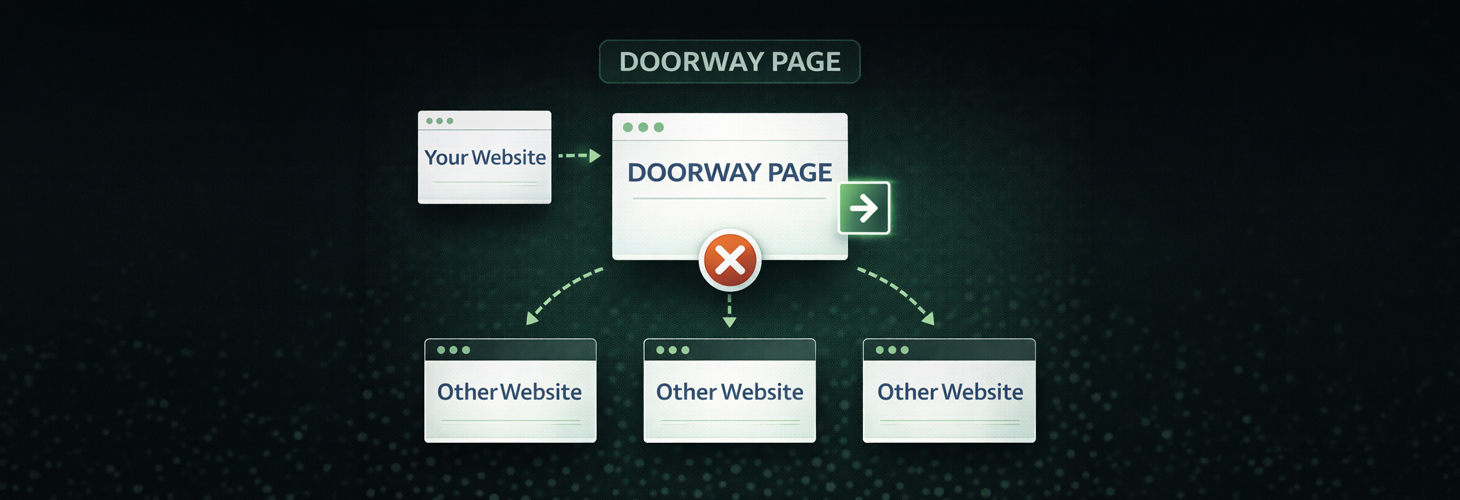
A doorway page is a page created primarily for search engines to rank for specific search terms, which then redirects visitors to another target page or offers them no value of its own. Doorway pages used to be common above all on websites that relied on Flash: because search engines could hardly read their content, text-heavy bridge pages with keywords were placed in front of them, redirecting users to the actual page after a few seconds. Today, the phenomenon usually appears differently: as a large number of almost identical pages that differ only in the search term – for example the same service page for dozens of cities, with only the place name swapped – or as pages that merely funnel visitors towards another offer. Doorway pages have nothing to do with high-quality content and good search engine optimisation.
Bridge pages give you no good chances in SEO
Doorway pages often go hand in hand with cloaking, i.e. the technique of showing visitors and search engines different content. Google explicitly lists doorway pages in its spam policies. The reason: they offer users no real value, but clog up the search results with interchangeable pages. If Google detects doorway pages, the pages are devalued or removed from the index; in the case of a manual action, the entire website can lose significant visibility. As a rule: stay away from doorway pages – there are better ways to optimise a website.
The alternative to doorway pages: landing pages in search engine optimisation
Well-made landing pages are a better way to win visitors via search engines. They also serve as an entry point to a website, but differ fundamentally from doorway pages in structure, content and value. A landing page specifically addresses the needs of a target group and answers their questions completely. Visitors get real value there and decide for themselves whether to click on – there is no automatic redirect. If you want to rank for several cities or regions, each page needs its own content with a genuine local connection, such as contact persons, references or local specifics. Interchangeable text templates with a changing place name are not enough.