
Hyperlink
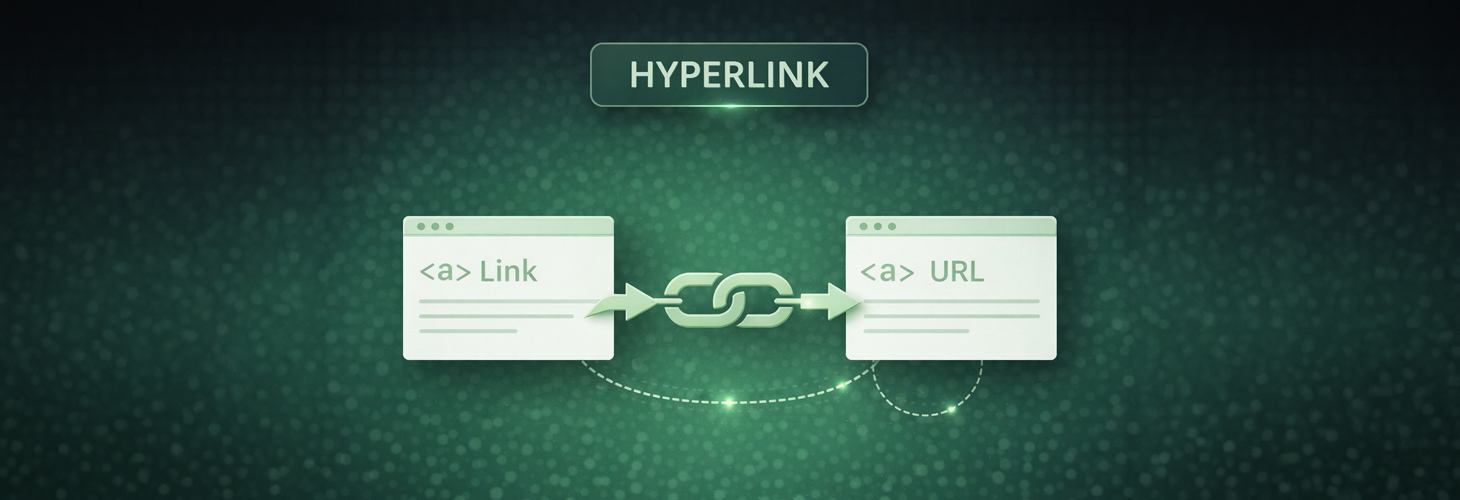
A hyperlink – link for short – is an electronic reference from one digital document to another. It can lead to another page on the same website (internal link), to another website (external link) or to a file such as a PDF or image. Links are usually visually highlighted, for example in colour or underlined. A click opens the linked document.
Hyperlinks are the basic building block of the World Wide Web, because they connect documents in a non-linear way. The idea corresponds to cross-references in a book: they open up new topics and make it possible to deepen knowledge. Ideally, links point to topically relevant content that interests the user. If a link points to a page on the same website, this is called internal linking. With it, the website owner controls which path visitors take – for example from the category to the product or from the guide article to the matching category – and gives the website structure. A link pointing from another website to your own is called a backlink.
How a hyperlink is structured
For users, only the link text (anchor text) of a link is visible – a word or phrase that ideally describes what awaits behind the link. Descriptive link texts are part of search engine optimisation, as they give search engines context about the target page. The invisible part is the target address (URL), which the browser uses to call it up. In the HTML source code, a link looks like this:
<a href="https://www.example.com">Link text</a>
The user reads the “link text” and reaches https://www.example.com with a click. Additional attributes control the behaviour: target="_blank" opens the link in a new tab, and rel="nofollow", "sponsored" or "ugc" give search engines hints about the type of link. If the target is moved or deleted, a “dead link” (broken link) is created that leads to an error page. Such links harm user experience and crawling and should be checked and corrected regularly – for example with crawling tools or Google Search Console. In shop systems and CMS, links are usually inserted via a button in the editor, or alternatively directly in the HTML code.
Hyperlinks are relevant for SEO
Links matter for search engine optimisation in two ways. Internal links guide crawlers such as Googlebot through a website, help it find all important pages and show which pages are particularly important – for example categories linked from many places. Backlinks, on the other hand, act as recommendations: if many trustworthy, topically relevant websites link to a page, Google sees this as a sign of relevance and quality. This can improve rankings significantly. The hyperlink is therefore one of the most important tools of search engine optimisation.